Intertidal exploration
Around the spring and autumn equinox, the sun exerts the largest tidal pull in conjunction with the full moon as it passes closest to the earth. As a consequence, the largest tidal ranges of the year reveal coastal habitats and everything that inhabits them that we don’t usually get to see.
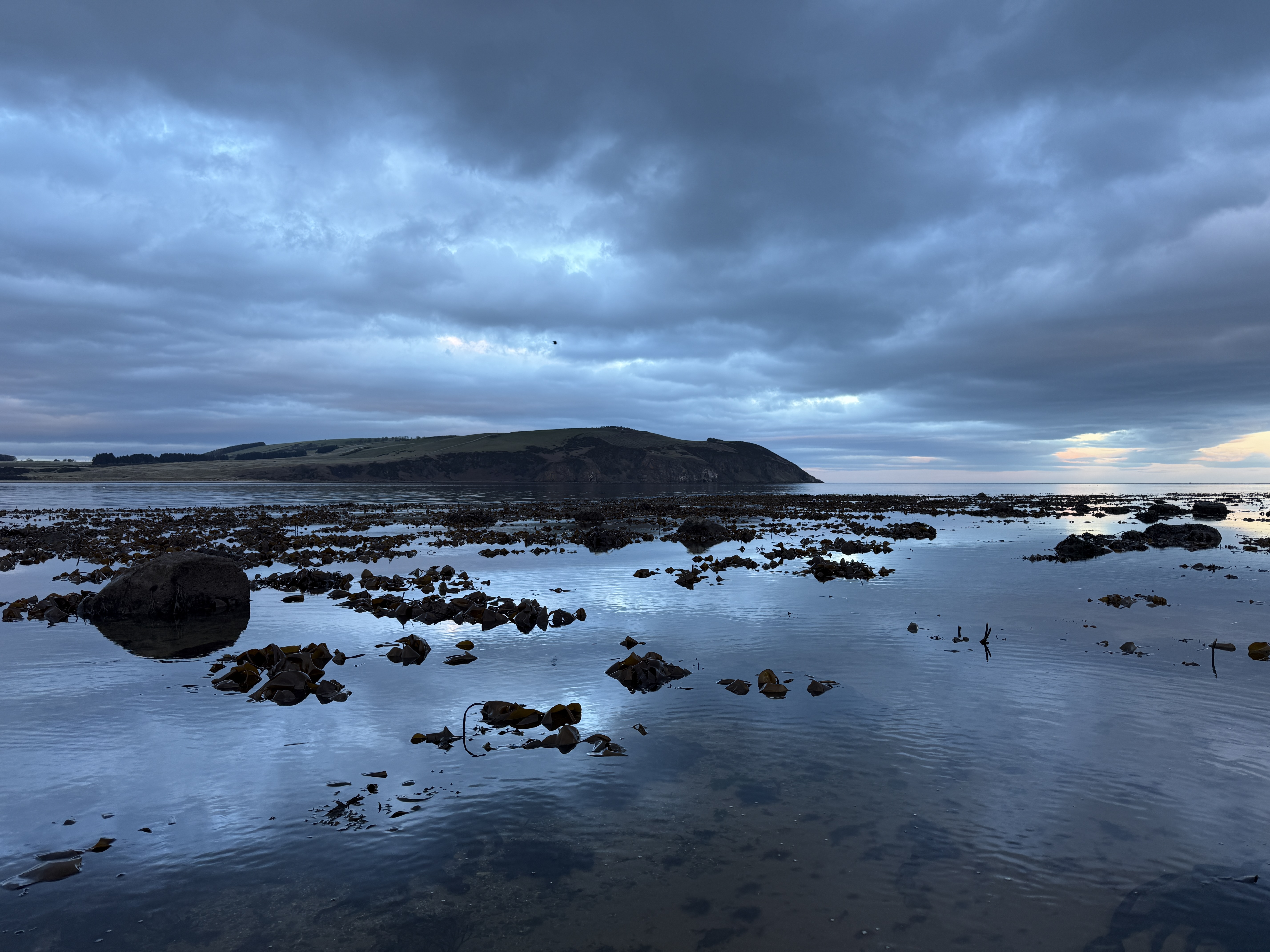
On the 2nd of march I made my way over to South Sutors at Cromarty, to investigate the coastline as the tide receded.Scattered rocks and boulders litter the upper to midshore. Soon after, vibrant Kelp, Red alga and various wrack species become dominant- some fully exposed by the super spring tide. Starfish, marine worm egg sacks, bristle worms, deceased crabs were common amongst the rocks and kelp. The underwater forest revealed itself- a band of dense kelp stretching along the coastline, parallel to the south sutors walkway. I would estimate that the kelp forest was 10-30m wide (fromwhere I could see it protruding from the water), and seemed to stretch as faras the firth opening. As I wandered amongst the kelp, yellow periwinkles,whelks and spider crabs were clinging to the kelp fronds, the rocks and the wrack. I imagine they were most inconvenienced by being so exposed by the tides, now vulnerable to predation.
I had recently read historic records of sub-tidal seagrass present at this site, once described as abounding around the large boulders. Like an excited child at Christmas, I endeavoured to find one plant to prove its existence here might still be possible. As the kelp was so dense, I deduced that this may not be suitable habitat, blocking out crucial sunlight seagrass needs to survive. I hadn’t managed to convince myself enough however, and decided to wade out further to prove or disprove my own thoughts.Then, my wellies started to fill with water. I made haste westward back towards the start of the south sutors trail, about 60m from the shore,, and came across large patches of submerged bare sand. Perhaps this was where the sub-tidal seagrass once existed? More investigation, and a wetsuit, is required.
On the 3rd of March (although tempted by a second visit to sutors), I decided to visit Alness Bay. I used the path signposted from the A9 to Alness point and once on the shingle beach, hung a sharp right down to the intertidal mud. Alness Bay is a fantastic area for coastal habitats- high abundance of wildfowl and waders, Saltmarsh, Intertidal seagrass beds, mudflats, Blue Mussel beds and Kelp clusters. I surveyed the seagrass on here multiple times last summer, and was fascinated about what might lie beyond the mean low water line.
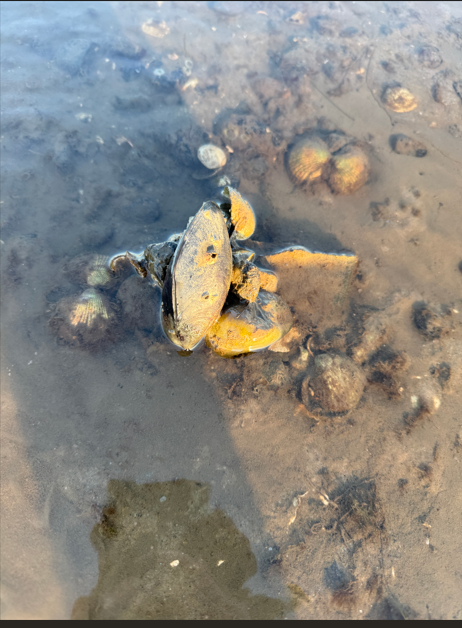
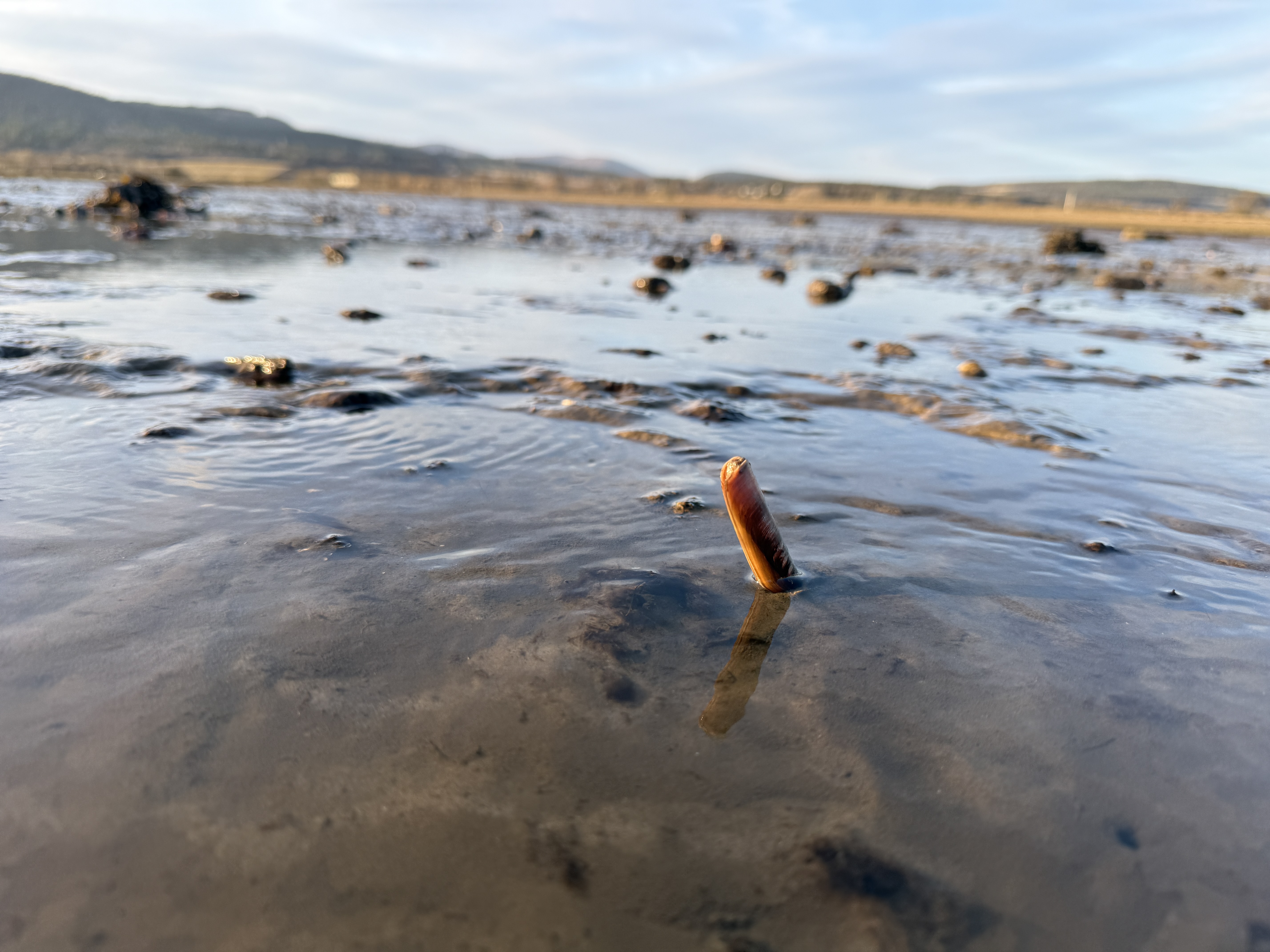
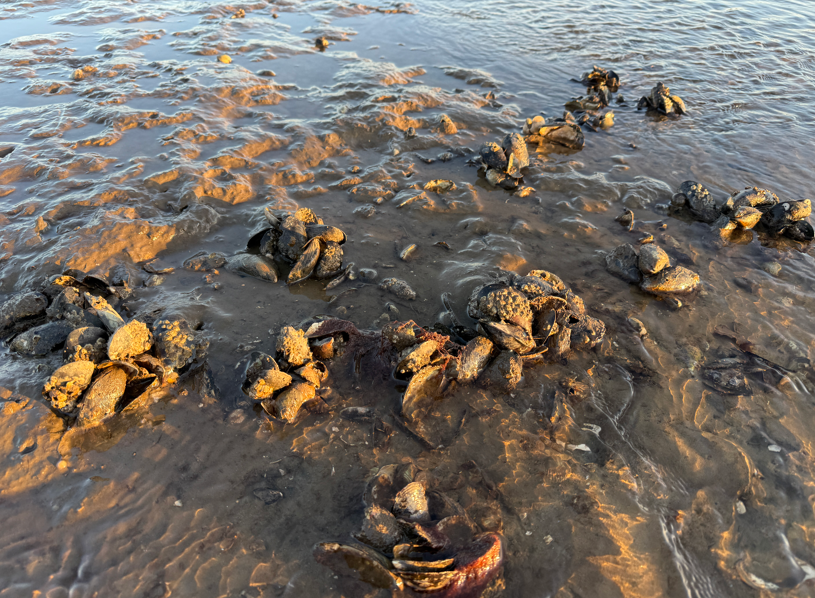
Immediately I came across blue mussels in congregations, marine worm sacks and a small mound of wrack. I had no idea at this point that Blue Mussels were here,only aware of their presence on the eastward side of yankee pier. Excited once more, I trudged through the mud to find out if this was an isolated patch, or if blue mussels were surviving here in this bay. I wasn’t disappointed. As I moved westward toward deep haven pier, I noticed raised bar areas further out towards the waters edge. Safety was on my mind, but coming this far to not have answers seemed the worse option than becoming stuck in the mud. I decided to investigate- I walked directly towards these raised areas, over streams and thick mud. In the streams Blue mussels, in clumps of 3 or 4, were present. Out of the streams, the mud flat was deep- I could feel old shell litter underneath.
I eventually arrived at a raised gravelled area, full of shells and blue mussels.This raised area extended out to the waters edge, full of bivalve cracking,clicking and fizzing. I stuck to this sediment type, finding old oyster shells,lots of blue mussels, cockles, and horse mussels. I could see a larger mound ahead at the waters edge, every finger was now crossed for evidence oysters may still be in the Cromarty Firth. Arriving at the mound, I found an island of kelp growing amongst some boulders, and more old oyster shells. No live oysters, but from my basic understanding of oyster ecology, the potential in this area is almost certainly there. Exposed kelp was visible on other raised areas, further into the firth which I could not reach. I decided to record my track back along this raised bed for recording and further investigation.
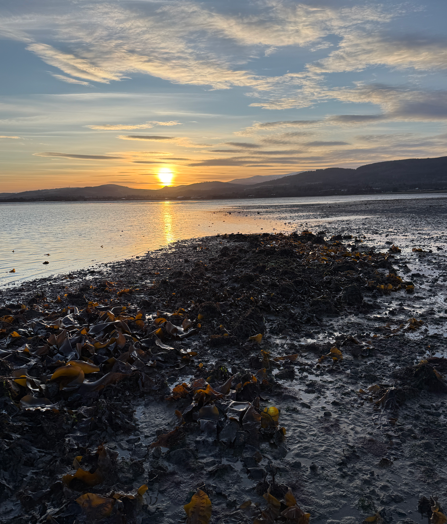
Again, my mind wondered about the past and what might have been. Was this bed of Blue mussels and Horse mussels historically formed by Oysters? Could Oysters re-establish here? Are the Blue mussels engineering this environment and is this the start of regeneration? Are they nearby and we just don't know? I have been on Oyster beds in the Thames, and this area reminded me just of what I saw there, exposed by the tides.
As the sun went down I made my way back over the mud to the shore, with one thought on my mind: the potential for marine conservation, learning and restoration in the Cromarty Firth is vast. Given the right intervention, understanding and monitoring, this place and the biogenic ecosystems here have exponential potential in creating a truly wild and natural marine environment. We are incredibly lucky that they are still here and on our doorstep.
.jpg)
.png)