Report of Seagrass Restoration – Core Transplant Technique
I arrived at the UHI campus where Mossy Earth have an office with four desks in the life sciences building. We had a look at the results of their seagrass seed harvesting efforts and then loaded the kit into the trucks to head off to the coal face. The type of seagrass restoration we were planning is called coring. Think the type of hair transplants you see some footballers get. Basically, it is transplanting living seagrass plants from a healthy seagrass bed to an area where there is either no or very little seagrass. But instead of just taking the plant and or the roots, you also transplant a core of sediment. If coring turns out to be more successful than other methods that involve moving just bare plants then it may indicate that there is something in the sediment that is aiding the plants survival.
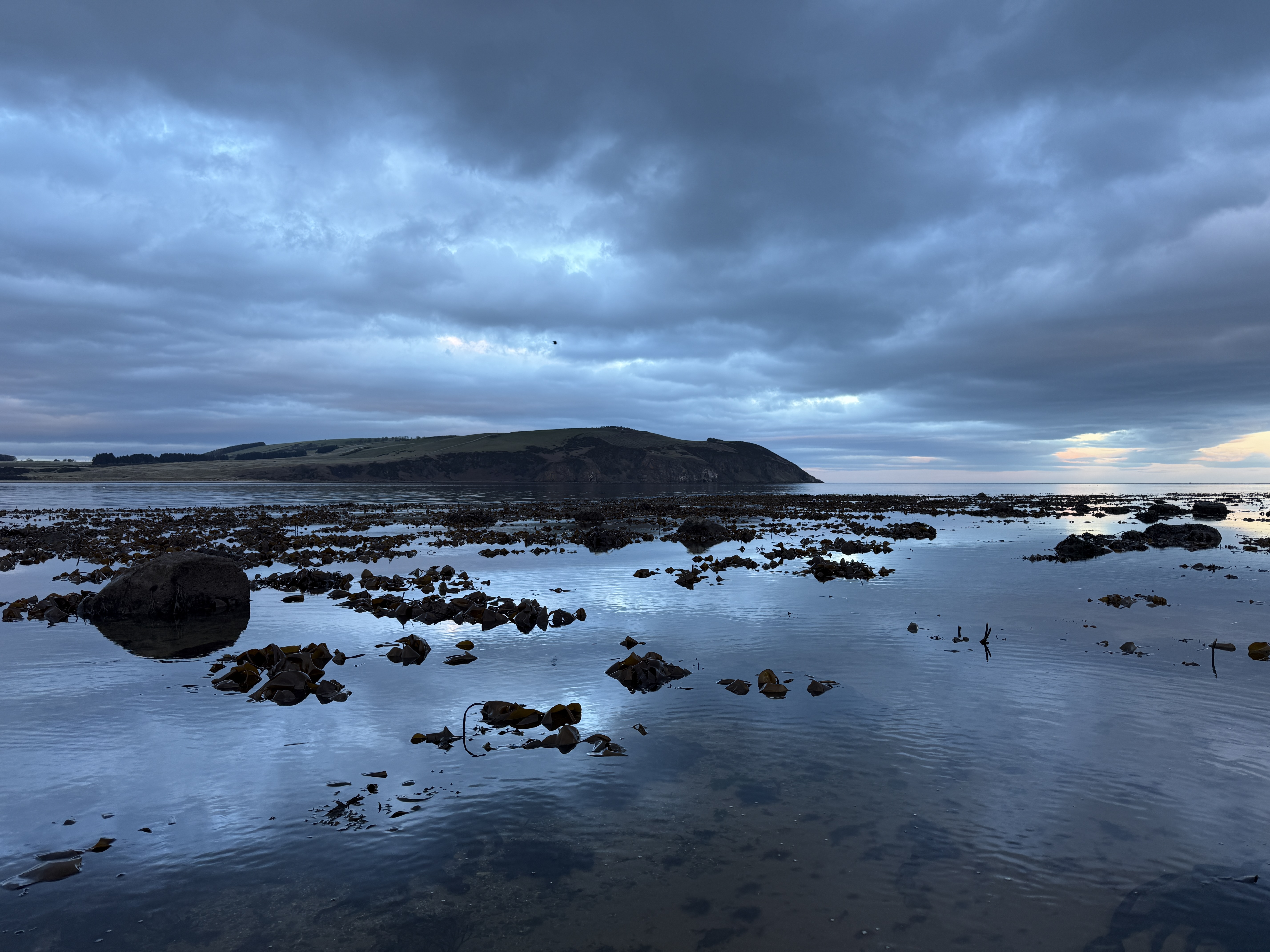
Our first port of call was Allanfearn. A beautiful little cove to the East of Inverness on the south coast of the Firth. Beautiful but a bit smelly. It is the location of a water treatment plant. Here the mud flats have a good covering of seagrass. Both dwarf eelgrass (Zostera noltii) and eel grass (Zostera marina). After suiting up in our waders we traversed the mud with our trolley of black drain pipe sections. When we arrived at a suitable location we collected a GPS waypoint. We then collected ten seagrass cores by shoving our drainpipe about ten inches into the sediment and removing, mud, gravel, seagrass, and anything else that happens to be lurking in the mud. The waypoint enables the site to be surveyed later to ensure our activities are not damaging the seagrass. When we had collected enough cores our trolley was dragged back across the mud to the van.
After a warm cup of tea and a chat about the environmental issues of the day we got back in the van and headed back into Inverness, over the Kessock bridge and a short way west along the north coast of the Beauly Firth. We travelled less than 10 miles. The shorter the distance we move the grass, the more similar the conditions will be, is the theory.
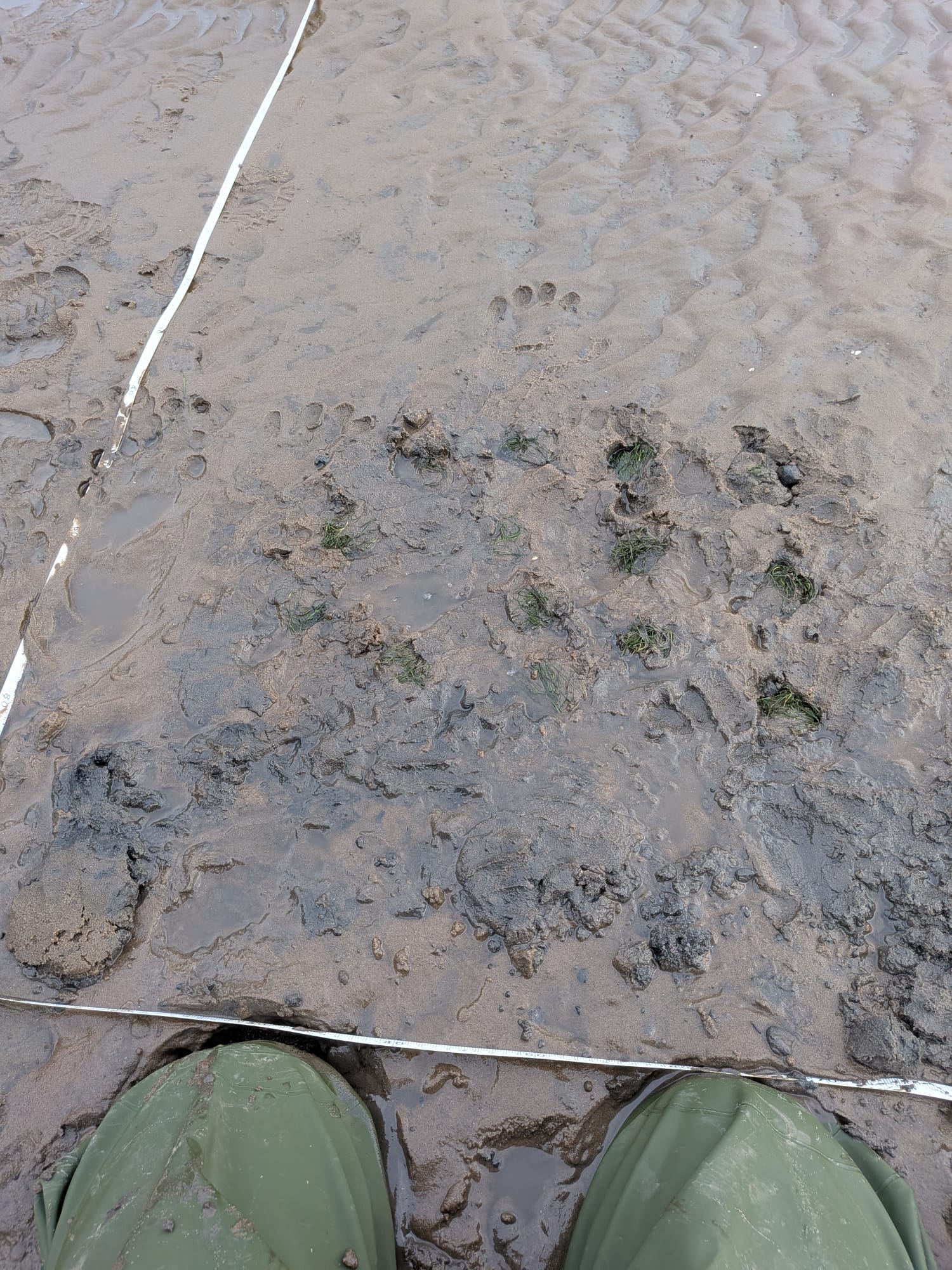
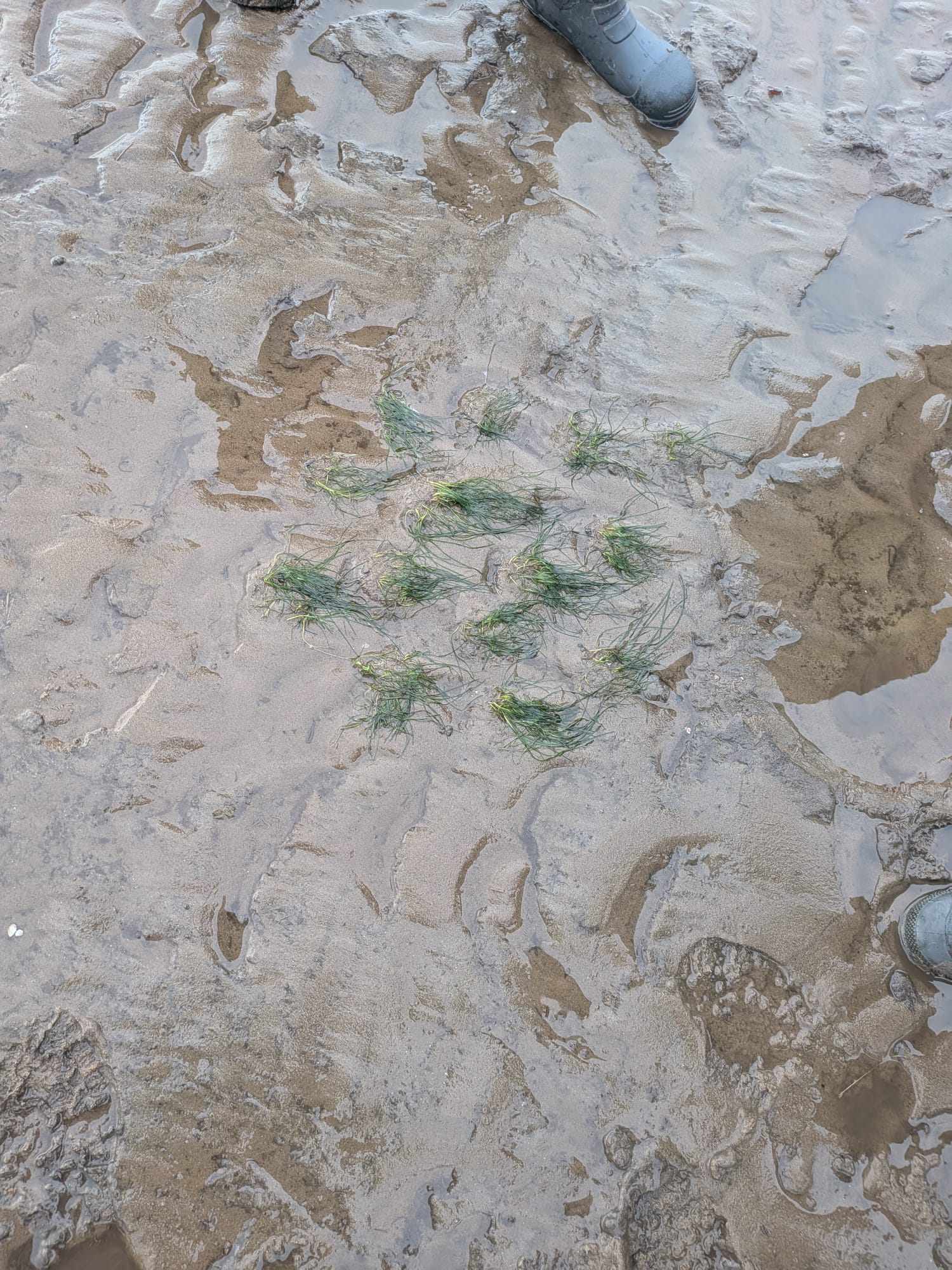
On arrival the cores were loaded back into our trolley, across the salt marsh and onto the beach were they would be planted. A five meter square was measured out and patches of 15 cores planted in each corner, with one further patch in the centre, to make the pattern you find on the five side of a dice. The goal is for each patch to expand and eventually fill the gaps.
I planted one patch, one fifth of a 25 square meter section of future seagrass meadow, fingers crossed. The team hopes to complete 4.2 hectares, 42,000 square meters of restoration. That is 1680 five meter squares, so there is a lot more work to do. Sign up now! It is a great way to get involved in something important, meet some great like-minded people and learn lots about seagrass and the marine environment on your doorstep.
Keep an eye on the MOC events page, the Wilder Firths social media or email hello@morayoceancommunity.co.uk to join our community WhatsApp group to find out when events are happening.
.jpg)
.png)